⚠️ Active water in your basement? Call for priority service → (514) 730-7107
Published October 12, 2026 · 7 min read · By the Fissure et Drain XT team, RBQ licence 5863-7364-01
In short
The short answer
A foundation crack is not automatically a structural problem. In Quebec, almost every poured concrete foundation ends up with shrinkage cracks, caused by the concrete drying in the months after construction. They are usually thin, vertical and stable.
You should worry when a crack lets water in, when it gets wider, when it is horizontal or when the two sides of the crack no longer line up. In those cases, don’t wait: water and freeze-thaw cycles make it bigger every year.
Types
Reading a crack by its direction
Thin and vertical
The most common case, often a concrete shrinkage crack. It is rarely structural, but it can let water through. If it seeps, it is sealed by injection from inside.
Diagonal
It often starts at a window corner or the top of the wall. It can point to slight soil settlement under part of the house. Watch it closely, especially if it widens toward the top.
Horizontal
The most serious. It often means soil or frost pressure is pushing the wall inward. A wall that bows or leans needs a structural engineer’s opinion before any repair.
Stair-step
Typical of concrete block foundations: the crack follows the mortar joints. It signals wall or soil movement, and it often lets water in.
Warning signs
6 signs it’s time to act
→Water or dampness along the crack after rain or during the thaw
→A crack that gets wider from one season to the next
→Offset sides: one side of the crack sticks out more than the other
→A horizontal crack or a wall bowing inward
→Doors and windows that suddenly stick, or new cracks in the drywall upstairs
→White streaks or rust running from the crack: water is already getting through
Monitoring
How to monitor a crack yourself
Take a dated photo with a ruler or tape measure next to the crack.
Mark both ends in pencil, with the date. If the crack later goes past your marks, it is growing.
Measure the width at the widest point and write it down.
Check again in spring and fall: movement and leaks show best during the thaw and after heavy rain.
A thin, dry crack that has stayed stable for several seasons often only needs monitoring. A crack that moves or lets water in should be treated.
Solutions
How a crack is repaired
For a crack that lets water in without a structural problem, the most common solution is crack injection from inside the basement, with no excavation in the vast majority of cases:
→Polyurethane: for a crack where water gets in. It expands and seals the crack through the full thickness of the wall.
→Epoxy: for a dry crack that also needs to be strengthened.
If the crack comes with a drain that no longer does its job, sealing the crack is not enough: the water will find another way in. The French drain should then be checked, ideally with a camera inspection. And if the wall is moving, a structural engineer should recommend a solution first.
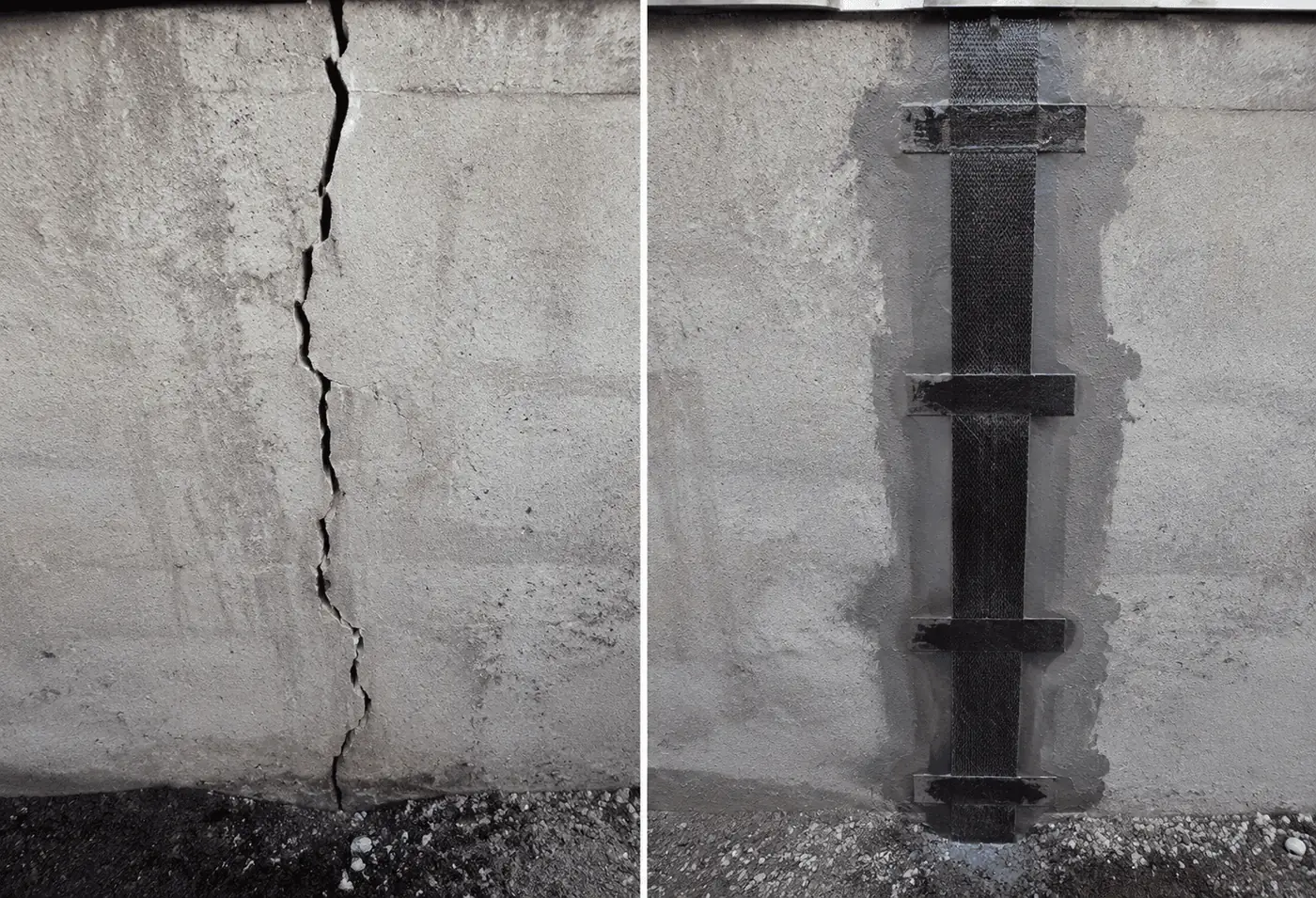
A crack that let water in, before and after injection from inside.
Common mistake
What to avoid
Filling a crack with cement or sealant from the inside hides the problem without fixing it: water keeps going through the wall and comes out somewhere else. Before finishing a basement, have any leaking cracks treated. It costs far less than tearing out a finished basement.
Frequently asked questions
Foundation crack: when to worry
Is it normal to have cracks in a new foundation?
+
Yes, shrinkage cracks are common in poured concrete foundations, even new ones. They are usually thin and vertical. They are only a problem if they let water in or get wider.
Is a foundation crack a hidden defect?
+
It depends on the case: how serious it is, what the seller knew and what was visible during the pre-purchase inspection. A crack that lets water in should be documented with photos and a report. For legal action, consult a lawyer or notary.
How long does an injection repair take?
+
Most cracks are repaired in one day, from inside the basement. Our injections come with a 12-year warranty.
Should a dry crack be repaired?
+
Not always. A thin, dry and stable crack can simply be monitored. Repair it if it widens, starts to seep, or before you finish the basement.
*
The warranty covers only workmanship defects and construction flaws related to the work performed by Fissure et Drain XT. It does not cover damage caused by ground movement, soil defects, earthquakes, exceptional flooding, work done by third parties or any unauthorized modification after the work is completed. Warranty transferable to the new owner upon written notice. RBQ 5863-7364-01.